Social safety nets create 1.66 million jobs, offset 24% of costs through tax revenues
The Benazir Income Support Programme (BISP) generates Rs2.34 in real income for every rupee transferred to vulnerable households, creating jobs. stimulating economic activity, according to new evidence presented at a policy dialogue in Islamabad.
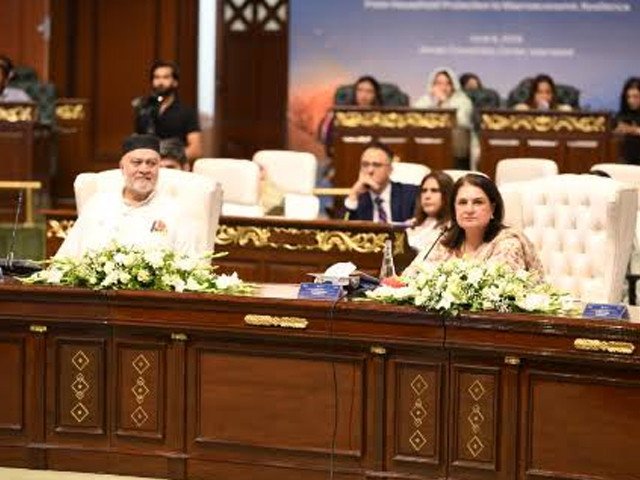
The event, jointly organised by BISP. the World Bank with support from the Foreign, Commonwealth and Development Office (FCDO), brought together federal and provincial leadership, development partners and International Monetary Fund (IMF) representatives.
The analysis. based on LEWIE-CGE modelling, shows that BISP-led social safety nets now reach over 10.2 million households, about 24% of families in Pakistan. The programme generates an estimated Rs1.67 trillion in annual income. Rs1.21 trillion in additional production while supporting around 1.66 million full-time-equivalent jobs.
Approximately 68% of the income gains reach the poorest 40% of households,. nearly 24% of the programme's costs are offset through tax revenues of about Rs174 billion annually. Federal Minister for Poverty Alleviation. Social Safety, Syed Imran Ahmad Shah, said social protection is now a central pillar of Pakistan's economic policy. He stated that the government is expanding social protection programmes through skill development initiatives to create greater employment opportunities. in line with the prime minister's vision.
He added that aligning economic reforms with social protection is essential for sustainable national development. BISP Chairperson Senator Rubina Khalid said the programme has become the backbone of Pakistan's social protection system, going beyond financial assistance to promote human development. economic empowerment. She noted that BISP reflects the vision of Shaheed Mohtarma Benazir Bhutto. serves as a model of women's empowerment and social inclusion.
Khalid highlighted that BISP is actively promoting education, maternal. child health, and skills development initiatives, including the Benazir Hunarmand Programme, which she described as a key step towards self-reliance. She further added that BISP possesses a strong institutional framework, reliable data systems,. effective partnerships, but emphasised the need to make the system more comprehensive, efficient, and responsive to emerging challenges. She emphasised that social protection provides families with the confidence to plan for a better future while contributing to education, employment. human capital development. She stressed that poverty reduction requires sustained political commitment. adequate resources, adding that social protection is not charity but an investment in economic growth, employment and human development.
Comments are moderated and generally will be posted if they are on-topic and not abusive.
For more information, please see ourComments FAQ
Discussion
Sign in to join the thread, react, and share images.