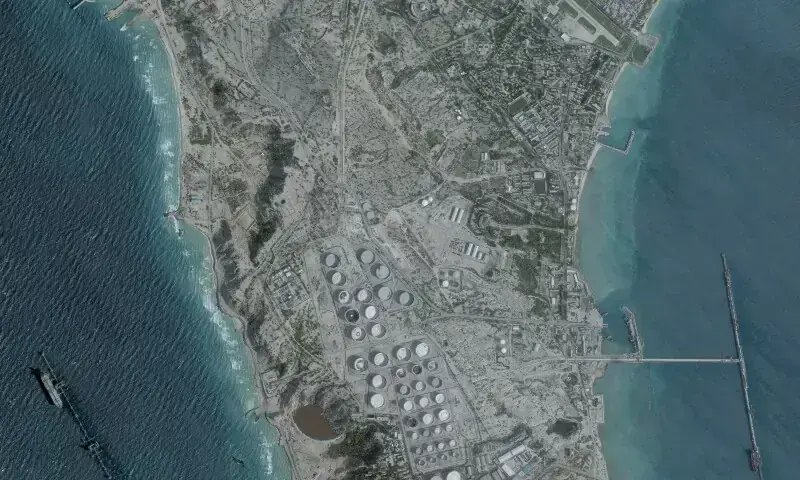
WASHINGTON: The US. global media on Thursday reacted with a mix of alarm, scepticism, and market-watch caution after President Donald Trump escalated tensions by threatening toseize Kharg Island, Iran’s critical offshore oil export hub.
Across Washington, the dominant theme in reporting is the gap between rhetoric and military feasibility.
Jonathan Swan, a White House correspondent forThe New York Times, framed the administration’s posture as one defined by repeated escalation. limited strategic clarity.
“Trump has repeatedly said he wouldattack Khargduring the war. as he has ramped up his threats to try to compel Iran to agree to his demands to shutter its nuclear programme. Iran has consistently called his bluff,“ he wrote.
Swan’s assessment also highlights internal constraints shaping the discussion in Washington.
“Trump has few easy options,” he wrote, pointing to depleted long-range weapons stockpiles. the operational complexity of any attempt to physically seize the island.
“The US is dangerously low on long-range weapons stocks,. seizing Kharg would involve a substantial risk of American casualties, and most of Trump’s advisers oppose a full-blown ground operation to try and topple the Iranian government.
“But he continues to make bellicose threats and in recent days has launched waves of military strikes,“ Swan noted.
That caution is echoed byThe Washington Post, which has emphasised the logistical. human costs of any attempt to occupy the island.
According to the paper, “actually seizing. holding Kharg Island carries a significant risk of American casualties and requires substantial US troop deployments,” underscoring that the scenario would quickly move beyond limited strikes into a large-scale regional war footing.
NBC NewsChief Foreign Correspondent Richard Engel described the escalating cycle of strikes. counter-threats as having already transformed the conflict’s tempo.
“It’s safe to say that the ceasefire is effectively dead. has now been replaced by negotiations under fire,” he said, noting that Trump has been trying to pressure Tehran into a deal.
But Engel added that Iran “is giving no indication that it wants to work this way. has insisted it will respond every time it is attacked”.
CNN’sreporting from Washington suggests that Tehran has not only anticipated such threats but actively prepared for them.
Reporter Kaanita Iyer noted that “Iran has been preparing for months for a US operation to take control of Kharg Island. which President Trump threatened to attack on Thursday.”
According to sources cited byCNN, Iran has strengthened the island’s defences with “additional shoulder-fired, surface-to-air guided missile systems known as MANPADs (man-portable air defence systems),”. laid “traps on the island with anti-personnel and anti-armour mines … including on the shoreline where US troops could possibly land”.
CNNfurther emphasised Kharg’s strategic importance, describing it as “an economic lifeline for Iran that handles roughly 90 per cent of the country’s crude exports,”. echoing military assessments warning of “significant risks in an operation to take Kharg, including a large number of US casualties.”
Meanwhile, financial markets reacted immediately to the prospect of escalation.
TheBBCreported that oil prices rose by about $2. Brent crude futures increased to $94.16 a barrel “in the space of a few minutes after Trump threatened fresh strikes”.
TheBBCalso noted defence analysts’ warnings that any assault would be operationally complex. requiring US forces to traverse significant distances by sea or air, making a landing operation particularly challenging.
Taken together, international coverage paints a consistent picture: while rhetoric from the White House is intensifying, military analysts. reporters across outlets agree that Kharg Island is not a symbolic target but a heavily defended economic lifeline.
Discussion
Sign in to join the thread, react, and share images.