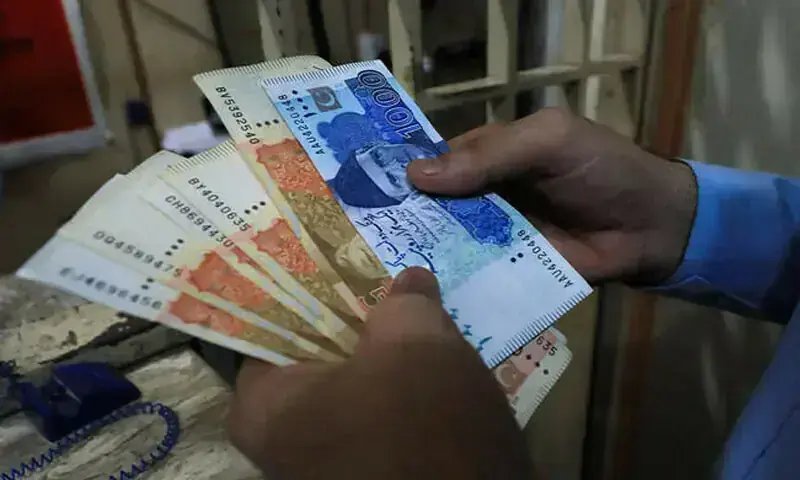
Pakistan ended FY25 with its strongest fiscal numbers in over 20 years and its weakest development budget in a generation. The deficit narrowed to 5.4 per cent of GDP, the primary surplus reached 2.4pc, the current account turned positive for the first time in 14 years,. reserves crossed $21 billion. The July-March data for FY26 has extended that into the lowest fiscal deficit in 27 years at 0.7pc of GDP. with a 3.2pc primary surplus.
Yet. federal development spending has been compressed to barely above 1pc of GDP, then cut mid-year from Rs1 trillion to Rs837bn, far below its peak of around 7pc in the public-investment era. Banks hold the bulk of their assets in government securities rather than private credit,. 25 state-owned enterprises lost Rs832bn last year.
Stabilisation has been delivered by squeezing the parts of the economy. generate growth — a pattern that FY26 has continued. The FY27 budget is the moment to correct this without surrendering what stabilisation has bought.
My earlier column, ‘Reforms for investment-led growth,’argued that raising Pakistan’s investment rate requires tax reform. The same logic requires expenditure reform alongside it. The deficit those tax cuts would deepen is the one already crowding out the formal economy from credit. public investment.
The primary surplus has been delivered by leaning harder on the tax-compliant corporate sector, on salaried Pakistanis whose effective rates already exceed regional peers,. on the masses paying indirect taxes embedded in everything they buy. Outside debt service, expenditure keeps rising.
Stabilisation has bought Pakistan a budget cycle; FY27 should use it to build
The first is the debt servicing’s gravitational pull on the federal budget. Interest payments will absorb Rs8.2tr in the FY26 outlay, almost 47 paise of every rupee the federal government spends, more than development, defence, education, health. subsidies combined. Even at a policy rate of 11.5pc, down from a peak of 22pc but lifted in April from a trough of 10.5pc as the oil shock fed into inflation expectations, the weight of debt service leaves little room,. that room shrinks the moment global rates move against us.
The second is the collapse of public investment, which loads a hidden cost onto the private sector. Federal development spending has fallen from around 7pc of GDP in the public-investment era to barely above 1pc today. well below what is needed for private capital formation.
When the state stops investing, banks redirect credit into government securities,. they now hold the bulk of their assets against sovereign paper while private investment remains among the lowest in the region. The crowding-out shows up on corporate balance sheets as a higher cost of capital.
The third is the cost of loss-making state-owned enterprises (SOEs) and a narrow tax base. The Central Monitoring Unit records aggregate SOE losses of Rs832bn across 25 entities. with fiscal support of over Rs2tr in FY25. On the revenue side, a primary surplus carried by a Rs2.4tr State Bank dividend. by compliant taxpayers cannot anchor durable growth. The external account looks comfortable today, but domestic deficits will decide how durable that comfort proves to be.
Three structural moves on expenditure can reset this in the FY27 budget. All are within the International Monetary Fund programme and within what the political system can carry.
First. adopt a binding fiscal rule that holds real non-interest expenditure flat for three years — a 5pc annual reduction against an inflation-adjusted baseline — with any further fall in interest cost kept separate.
The rule is credible because it does not ask ministers to defend the closure of named departments. It simply keeps aggregate non-interest expenditure within an envelope and forces prioritisation that line-item debates never deliver. Sustained for a parliamentary term, it would release roughly Rs1.5tr for development. human capital, and for a gradual rollback of the super tax.
Second, the state should accelerate the SOE reform programme it has already begun. Privatisation, restructuring and wind-up are on the table, and the Pakistan International Airlinesprocesshas shown delivery is possible. As American economist W. Edwards Deming observed, for organisations facing structural change, survival is not mandatory. Extending the same discipline to power distribution companies, railway freight,. entities where the state has no continuing strategic interest would free up resources and show the reform programme has follow-through.
Third, within that envelope, priority cuts must come from three categories where federal spending no longer serves its purpose. Untargeted energy subsidies of more than Rs1.1tr in FY26 accrue disproportionately to non-poor households. when the Benazir Income Support Programme infrastructure can already deliver targeted relief.
An unfunded pension bill of Rs1tr requires a faster transition to a contributory model. a credible plan for the legacy stock. And around Rs300bn a year continues to flow through federal ministries operating on subjects devolved to the provinces in 2010. an excess footprint the provinces have every incentive to help consolidate.
These reforms cannot wait, because the external environment will not. The Strait of Hormuz remains in a fragile pause as a US-Iran ceasefire holds and a14-point peace frameworkmoves through evaluation. Brent has settled in the $106–110 range,. the International Energy Agency has warned the market will remain undersupplied through October even if the conflict ends.
Pakistan imports four-fifths of its crude through that single waterway,. the Asian Development Bank has flagged risks for inflation, the current account, and Gulf remittances. Reserves cover roughly three months of imports. The right response is to widen our margin of safety using the domestic policy space we still have.
A binding rule on non-interest expenditure, faster SOE reform,. a credible plan for subsidies, pensions and the post-18th Amendment footprint would together do what no single tax measure can. They would show markets and partners that stabilisation has become reform.
The writer is the Chairperson of the Pakistan Business Council.
This is the second of three pieces in PBC’s case for reform.
Published in Dawn, The Business and Finance Weekly, May 18th, 2026
Discussion
Sign in to join the thread, react, and share images.