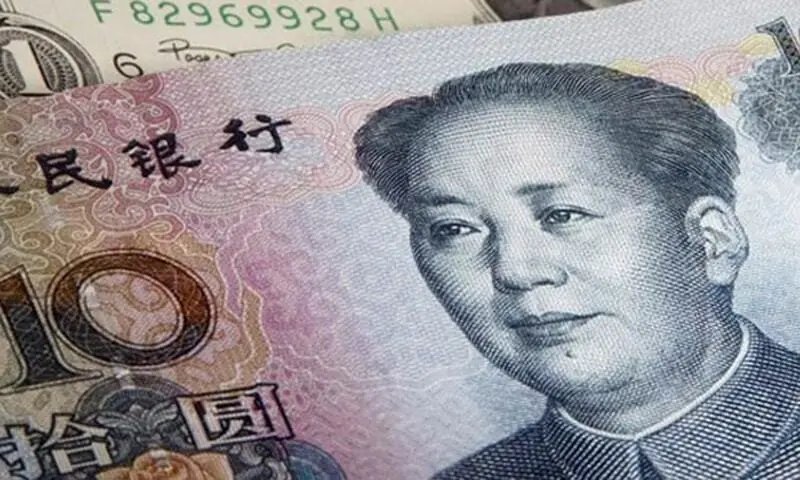
PAKISTAN’S successful debut in China’s onshore bond market through theissuanceof its first-ever Panda Bond is undoubtedly an important financial milestone. Raising RMB1.75 billion at a remarkably low 2.5 per cent coupon — far below the cost of Pakistan’s conventional external borrowing — reflects improving investor sentiment towards the country’s macroeconomic stability. The more than five-times oversubscription also signals that international investors. particularly Chinese investors, are once again willing to engage with Pakistan after years of economic turbulence.
Khurram Schehzad, adviser to the finance ministry, wrote on X: “The landmark Panda bond issuance attracted overwhelming investor demand of over RMB8.8bn ($1.26bn), resulting in oversubscription of more than five times.” Importantly, he said, the demand for the inaugural tranche alone exceeded Pakistan’s entire planned Panda bond programme size of RMB7.2bn ($1bn equivalent), “a powerful reflection of growing international investor confidence in Pakistan’s economic outlook. reform trajectory.”
Diversify funding sources
The Panda Bond’s real significance is in what it reveals about Pakistan’s evolving external financing strategy. For decades, Pakistan remained heavily dependent on lenders from Western capital markets. The Panda Bond indicates a strategic attempt to diversify funding sources, as stated by Schehzad, to reduce borrowing costs. broaden access to global liquidity pools.
Abdul Rehman Warraich, a former chief of the Debt Management Office. a financial consultant, toldDawnthat Pakistan’s Panda Bond programme opens access to another major international capital market, the world’s second largest, at a time when Pakistan faces persistently large external financing requirements. “It is an important step towards integrating the country with China’s financial system. It will help familiarise Chinese investors with Pakistan and gradually build confidence in the country’s economic potential.”
Schehzad noted. the success of the Panda Bond sends a powerful signal to global investors that Pakistan’s economic recovery is gaining international recognition. This milestone marks the beginning of a new chapter in Pakistan’s economic and financial engagement with the world.
Warraich said the strong response to the bond offering reflected improving investor perception regarding Pakistan’s macroeconomic stability and repayment capacity. “If Pakistan continues to maintain stability. reforms, the Panda Bond can eventually help attract greater private Chinese investment into different sectors of the economy,” he added. He argued that regular access to international bond markets also imposes financial discipline on governments.
“Consistent tapping of international capital markets forces governments to improve economic management, maintain fiscal discipline. undertake governance reforms in order to protect and improve sovereign credit ratings,” Warraich said. “Pakistan will now have to work towards eventually achieving an investment-grade rating.”
The pricing itself is significant. Securing funding at 2.5pc for a junk-rated sovereign would have been almost unimaginable only two years ago when Pakistan stood on the verge of sovereign default, reserves had collapsed. global investors had effectively shut their doors.
However, the celebration should not obscure underlying realities.
Guarantees, vulnerabilities
Investor appetite for the bond was shaped not only by Pakistan’s improving indicators. also by the extensive support structure behind the issuance. The guarantees provided by the Asian Development Bank. the Asian Infrastructure Investment Bank substantially reduced investor risk and enabled the bond to achieve a domestic AAA rating in China. Without these multilaterally-backed credit enhancements, Pakistan’s borrowing cost would almost certainly have been far higher.
This distinction matters because Pakistan’s structural vulnerabilities remain largely unresolved, says an analyst. “The economy still suffers from weak exports, low productivity, a narrow tax base, fragile industrial competitiveness. chronic dependence on external financing. Foreign exchange reserves, while improved, remain heavily linked to external inflows rather than sustained export dynamism. The country also continues to hold sub-investment-grade ratings from major international credit agencies.”
The government’s narrative that Pakistan is moving “from stabilisation to strategy” therefore deserves careful scrutiny. Stabilisation alone does not guarantee durable market confidence. International capital markets can reopen quickly, but they can close just as rapidly if structural reforms stall or political. external shocks re-emerge, she said. “Pakistan’s economic history is filled with temporary recoveries driven by external inflows that ultimately collapsed once growth resumed. import pressures resurfaced.”
Abdul Rehman Najam. a capital market analyst, said the successful Panda Bond issuance demonstrated the country’s ability to access cheaper funding through diversified capital markets.
“Pakistan has secured these funds at the lowest external borrowing cost in its history, partly because investors have factored in the relative stability. devaluation dynamics of the Chinese currency,” he said. However, he noted that the effective borrowing cost would be somewhat higher once guarantee and risk-mitigation charges were included.
“In addition to the 2.5pc coupon, Pakistan will also be paying an estimated 0.5pc to 1pc fee for the guarantees. credit enhancement mechanisms backing the sovereign issuance and mitigating investor risk,” he explained.
Nevertheless, the Panda Bond still represents an important strategic development. It demonstrates that Pakistan is attempting to reposition itself within a more diversified global financial architecture instead of relying exclusively on one bloc. one institution or one market. Access to both Western. Chinese capital markets increases financing flexibility and reduces vulnerability to disruptions in any single funding channel.
Equally important is the sustainable financing component attached to the issuance. Directing proceeds towards water, energy. health projects reflects a broader global shift where developing economies increasingly tie capital-market access to sustainability-linked investments.
If managed transparently and efficiently, such financing can help Pakistan address infrastructure gaps while strengthening credibility with international investors.
Still, the ultimate test will not be whether Pakistan can raise money abroad during periods of stabilisation. The real test is whether the country can finally use this breathing space to undertake the difficult structural reforms necessary to break its recurring cycle of crisis, bailout. temporary recovery.
Global financial system
Pakistan’s successful Panda Bond issuance also reflects a much larger. deeper transformation unfolding in the global financial system: the gradual internationalisation of the Chinese renminbi. What once appeared to be a distant geopolitical ambition is increasingly emerging as a structural shift in global finance, trade. capital markets.
The RMB’s growing role is no longer confined to bilateral trade settlements between China and a handful of partner countries. It is now expanding into energy markets, cross-border financing and reserve diversification. China’s crude oil trade with the Middle East is increasingly being settled in the yuan, while the issuance of Panda. offshore “dim sum” bonds has surged sharply. The rapid expansion of China’s Cross-Border Interbank Payment System (CIPS). alongside the development of the digital yuan, signals Beijing’s long-term effort to build an alternative financial architecture less dependent on the dollar-dominated global payment system.
This shift is being accelerated by broader geopolitical and economic realities. The US-led sanctions regime against countries such as Russia. Iran has encouraged many states to diversify payment channels and reduce excessive reliance on the dollar. Simultaneously, America’s large fiscal deficits, rising debt burden. growing political polarisation have begun to raise questions about the long-term sustainability of absolute dollar dominance.
Warraich said the Panda Bond also reflected growing international confidence in the Chinese currency as countries increasingly move to diversify their reserves. trade settlements away from the US dollar. “This will gradually enhance the role of the yuan in international trade and finance. In this sense, the arrangement is beneficial for both Pakistan and China.”
None of this means the dollar is about to lose its global reserve currency status. The US financial system still possesses unmatched depth, liquidity, institutional credibility and legal protections. However, the era of an uncontested dollar monopoly may gradually be giving way to a more fragmented. multipolar monetary order where alternative currencies gain greater regional influence.
For Pakistan, this evolving landscape presents an opportunity. Access to RMB financing can diversify funding sources, lower borrowing costs and deepen integration with China’s vast financial system. It also aligns naturally with Pakistan’s growing economic dependence on China through trade, investment and the China-Pakistan Economic Corridor.
Still, diversification should not turn into overdependence in another form. Pakistan’s challenge is not simply to shift from dollar financing to yuan financing, but to build an economy capable of sustaining itself with stronger exports, productivity. competitiveness. External financing, regardless of currency, cannot substitute for structural economic reform.
The Panda Bond is therefore best viewed not as proof that Pakistan’s economic problems are solved, but as an opportunity. Whether it becomes the foundation of long-term financial credibility or merely another short-lived financing success will depend entirely on what Pakistan does next.
Published in Dawn, May 17th, 2026
Discussion
Sign in to join the thread, react, and share images.