• Rs4.7tr federal. provincial development plans may be revised• Federal PSDP may rise above Rs1.3tr; provincial ADPs could be trimmed• Mega projects face major cost, time overruns
ISLAMABAD: The National Economic Council (NEC) is set to meet on Monday (today). may revise federal and provincial development plans worth Rs4.715 trillion for the next fiscal year amid conflicting fiscal needs of critical political and other institutional stakeholders.
The NEC — the highest economic decision-making forum of the federation, led by the prime minister. comprising the four chief ministers and four federal ministers — has a four-point agenda for the meeting.
The first item pertains to a review of the Annual Plan 2025-26, approval of the Annual Plan 2026-27. a presentation on key socio-economic indicators of the provinces.
This will be followed by a review of Public Sector Investment (PSI) 2025-26, the proposed PSI 2026-27. confirmation of changes made in the PSDP 2025-26 through addendums, corrigendums and adjustments on the directives of the prime minister, including a cut of around Rs175bn. The meeting will also include presentations on provincial annual development plans by the four chief secretaries.
Besides, the NEC will take up a progress report of the Central Development Working Party (CDWP) from April 1, 2025, to March 31, 2026,. schemes approved by the CDWP and the Executive Committee of the National Economic Council (Ecnec) during the same period.
Projects face delays, overruns
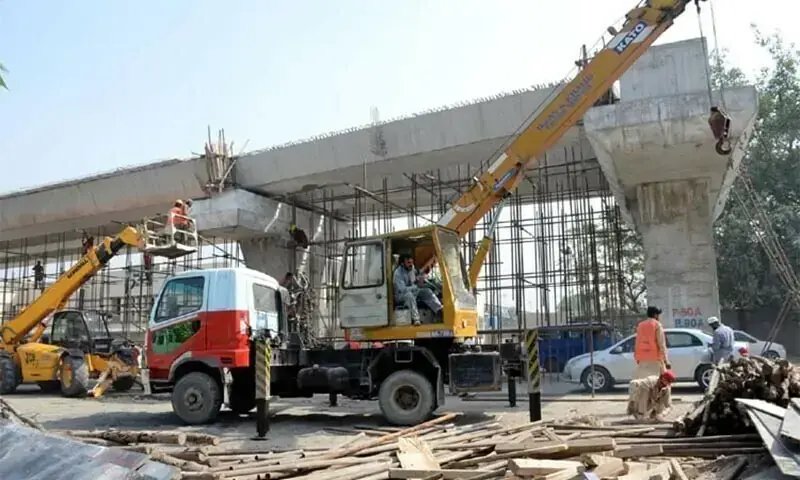
The Planning Commission will also present highlights of the monitoring and evaluation report of mega projects.
According to the report, the PSDP 2025-26 portfolio comprised 801 projects, including 734 ongoing. 67 new initiatives being implemented by 40 ministries, divisions and state-owned enterprises. Out of 240 projects selected for monitoring during the current financial year. 170 had been monitored by March 2026, including specially assigned cases.
Priority monitoring was accorded to mega projects, government special initiatives, donor-funded interventions and slow-moving schemes.
The monitoring exercise revealed that delays in project completion were mainly caused by inadequate financing, weak project planning. preparation, delays in land acquisition and no-objection certificates, litigation, procurement bottlenecks, delayed release of provincial shares, weak project management capacity and changes in scope.
“Analysis indicates that approximately 25 per cent of ongoing projects are facing cost overruns, while nearly 79pc are experiencing time overruns, placing additional burden on public finances. affecting development outcomes,” the report said.
Senior government officials said the consolidated federal. provincial development programme for next year, approved by the Annual Plan Coordination Committee (APCC) last week, could see significant changes because of the Centre’s greater financial needs while protecting the primary budget surplus at 2pc of GDP, or more than Rs2.8tr, as committed to the IMF.
However, the annual plan projections for next year cleared by the APCC are expected to remain mostly unchanged.
Officials said the federal PSDP of Rs1.126tr cleared by the APCC may go beyond Rs1.3tr. while the size of provincial annual development plans could be lower than the Rs3.138tr indicated last week.
They said the PSDP summary for next year contained the Rs1.126tr allocation with a request for enhancement by the NEC.
They added. these changes would be finalised during the NEC meeting as political engagements continued with coalition partners to reach common ground.
Officials said the Centre’s push for Rs1.7tr in additional fiscal space from the provinces. on top of a cash surplus of close to Rs2tr, or about 1.4pc of GDP, for next year had now been reduced by almost one-third to around Rs1tr.
However, allocations for coalition partners’ schemes. ruling party parliamentarians are expected to remain largely unchanged at Rs87bn and Rs70bn, respectively, for next year.
The NEC will also be briefed on slippages in the economic growth target, mainly because of external factors, with next year’s GDP growth target set at 4pc. inflation projected at 8.2pc.
The commodity-producing sectors are targeted to expand by 3.9pc next year, driven by 3.8pc growth in agriculture. 4.5pc growth in large-scale manufacturing.
Agricultural growth is expected to be supported by recovery in important crops, projected at 3.6pc, cotton ginning at 2.5pc. livestock at 3.9pc.
The industrial sector is targeted to grow by 4pc in 2026-27, mainly due to a revival in large-scale manufacturing, alongside growth momentum in mining. quarrying, construction and energy, including gas and water supply.
The services sector is targeted to grow by 4.2pc, underpinned by stronger performance in wholesale. retail trade at 4.2pc, transport, storage and communications at 3.7pc, financial services at 4.5pc, and information and communication at 7.7pc.
“These targets are contingent on effective macroeconomic management and stable external conditions,” the Planning Commission warned.
It projected national savings for the next fiscal year at 14.3pc of GDP compared to 14.1pc in the current fiscal year. The investment rate is targeted to reach 15pc of GDP, against 14.4pc in the current fiscal year.
Highlighting a risk, the Planning Commission said the external sector could face pressure as easing import controls. debt repayments were likely to widen the current account deficit next year.
Published in Dawn, June 8th, 2026
Discussion
Sign in to join the thread, react, and share images.