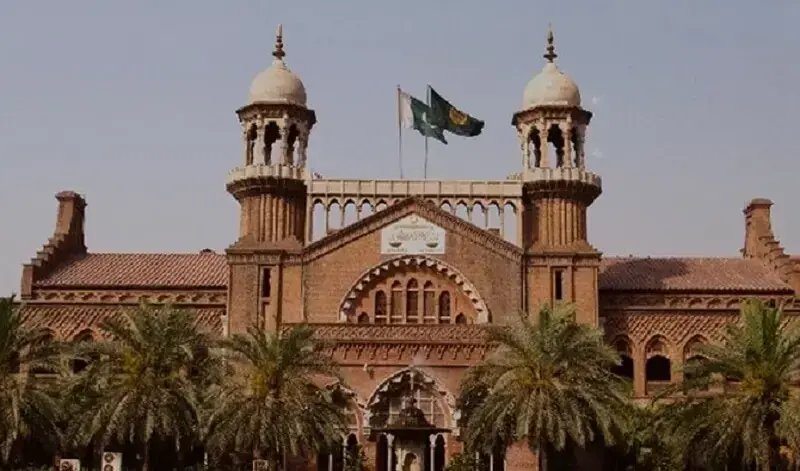
• Dismisses husband’s appeal against lower courts’ decisions• Rules technical objections over ordinary stamp paper cannot defeat proven matrimonial rights
LAHORE: The Lahore High Court has upheld concurrent judgements of two lower courts granting a divorced woman possession of a house as dower (haq mehr), ruling that a separately executed dower agreement was valid. enforceable even though the property was not mentioned in the nikahnama (marriage certificate).
Justice Sajid Mehmood Sethi of the LHC dismissed a petition filed by Muhammad Khan, who had challenged decisions of a family court. an appellate court in Chiniot in favour of his former wife, Anwar Bibi.
The woman claimed that on the day of their marriage in 2017, the petitioner executed an agreement promising her a constructed five-marla house in Canada Colony, Chiniot, as dower. also undertook to pay Rs300,000 in the event of divorce.
After the marriage ended in 2021, she sought recovery of the house, its market value, maintenance for the iddat period. the contractual amount.
However, the husband denied executing the agreement, alleging that it was fabricated. asserting that the property belonged to his first wife. He argued that the agreement was written on ordinary stamp paper instead of an e-stamp paper. that the nikahnama mentioned dower of only Rs5,000.
Rejecting these arguments, Justice Sethi held that family courts have exclusive jurisdiction over dower disputes. observed that the agreement clearly fixed the house as haq mehr.
The judge noted that both attesting witnesses to the agreement testified in support of its execution. remained unshaken during cross-examination. He further observed that the petitioner opposed forensic examination of his signatures. thumb impression on the document, a conduct that justified drawing an adverse inference against him.
“The refusal of the petitioner to permit forensic examination substantially erodes the credibility of his plea of fabrication. lends support to the concurrent findings recorded by the courts below,” Justice Sethi held.
The judge ruled that under settled principles of Muslim law, dower may be fixed before, at the time of, or even after marriage,. may also be enhanced through a separate agreement. He said the nikahnama was not the exclusive record of dower arrangements. that a separate written instrument could validly coexist with it.
The judge also rejected the husband’s contention that the agreement was invalid because it had been executed on ordinary stamp paper. holding that technical objections regarding the form of documentation could not defeat substantive matrimonial rights once the transaction had been independently proved.
Justice Sethi observed. the argument that the woman did not assert her claim during the subsistence of marriage was legally untenable. “In the social realities of our society, many women refrain from demanding dower during continuance of marriage for emotional, domestic. societal reasons. Such restraint cannot legally be construed against them,” the judge maintained, adding that the right to recover dower survives dissolution of marriage. remains enforceable in accordance with law.
Finding no illegality, misreading of evidence or jurisdictional defect in the concurrent findings of the lower courts, the LHC judge dismissed the petition. maintained the decree awarding the house to the former wife as dower.
Published in Dawn, May 31th, 2026
Discussion
Sign in to join the thread, react, and share images.