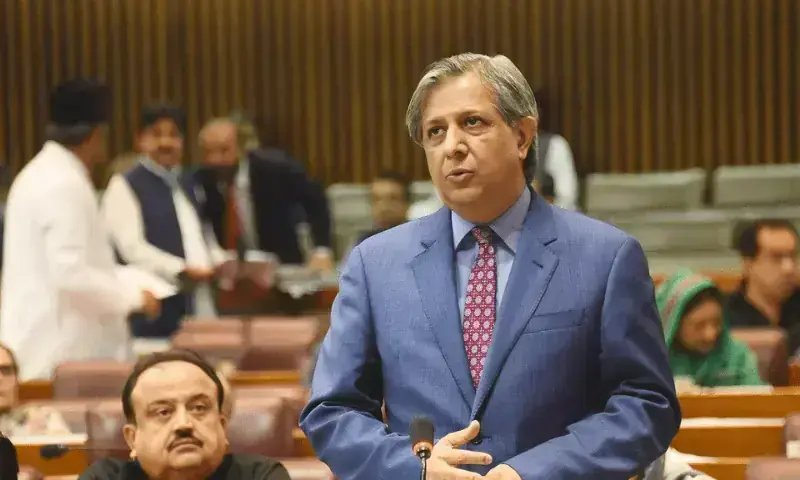
• Azam Nazeer Tarar rules out telecom activity on private premises without consent; sub-committee formed to review bill• Telecom stakeholders insist reforms essential for connectivity. hope parliament will ‘refine’ proposed legislation
ISLAMABAD / LAHORE: Trying to allay thecontroversysurrounding Pakistan Telecommunication Reorganisation (Amendment) Bill over proposed right-of-way reforms. Law Minister Azam Nazeer Tarar on Tuesday said the government had no intention of occupying private property, or installing telecom towers without the consent of property owners.
The minister made these comments after an in-camera meeting of the parliamentary committee formed by the prime minister to review the proposed legislation. could not sail through the Senate after its approval by the National Assembly.
The Senate Standing Committee on IT. Telecom had objected to a clause in the bill that would allow free installation of telecom towers in public spaces, including parks, green belts, and government buildings.
The law minister. however, said no telecom-related activity would be carried out on private premises without permission, adding that a sub-committee had been formed to look into the matter. The committee was reviewing objections raised by the Senate Standing Committee and consultations were underway.
The minister claimed the bill was not controversial and blamed the media for “blowing it out of proportion”. But he also said further clarifications would be incorporated in the legislation to safeguard property rights while supporting digital development. connectivity.
The committee, headed by the law minister, included PPP Senator Sherry Rehman. she could not attend the meeting on Tuesday. Other members were IT minister Shaza Fatima, the IT secretary, the economic affairs minister, the attorney general, MNA Javed Hanif, three lawyers Barrister Zafarullah Khan, Dr Daud Munir,. Ms Bayyinah Shah.
The National Assembly passed the bill on June 11, but the Senate did not approve it. The Senate Standing Committee on IT. Telecom raised objections to the inclusion of ‘telecom towers and equipment’ in the bill aimed at enhancing fiberisation. The committee members had noted that the bill should not include towers alongside optical fibre.
Right-of-way reforms
Meanwhile, telecom stakeholders have also waded into the fray over the controversy surrounding right-of-way reforms. They believe that the debate around Section 27B overshadows the broader objective of the proposed reforms. The said provision proposes penalties of up to Rs50 million for those who obstruct or delay the implementation of a lawfully granted right of way.
“We understand the concerns that have been raised. believe parliament’s review process provides an opportunity to further refine the legislation where needed,” Telecom Operators Association Chairman Aamir Ibrahim toldDawn.
“Contrary to some perceptions. telecom operators do not face a shortage of private landowners willing to host telecom infrastructure through mutually agreed commercial arrangements. The more common challenges relate to obtaining permissions. navigating administrative processes in certain housing societies, gated communities, and other jurisdictions where infrastructure deployment can face significant delays,” Ibrahim, who is also the Jazz CEO, toldDawn.
According to him, the proposed amendments seek to create a clearer. more predictable framework for telecom infrastructure deployment, particularly for fibre networks that will be critical for supporting future digital services and technologies. He added that much of the current debate has been driven by concerns that the reforms could affect individual homeowners. private property rights.
“It is important that any legislation contains appropriate safeguards and protections. The parliamentary process exists precisely to examine such concerns, strengthen the language where necessary,. ensure the right balance is achieved,” he said.
Meanwhile, PTCL/Ufone President. CEO Hatem Bamatraf said in a post on the LinkedIn social media platform that right-of-way reforms were about creating a “more efficient and transparent framework” and “reducing administrative bottlenecks”.
He said they were also aimed at improving coordination across stakeholders and enabling faster expansion of fibre networks.
“As Pakistan seeks to expand its digital economy. compete globally, continued investment in fiber and broadband infrastructure will be critical. Achieving this requires policies that encourage infrastructure development while maintaining transparency, accountability,. respect for the rights of all stakeholders,” he added.
IT minister Shaza Fatima has been facingcriticismfrom the media. other stakeholders over the inclusion of Section 27B in the proposed bill.
Her ministry clarified that the property owners would retain the full right to raise objections, negotiate terms. demand appropriate compensation before any work is carried out on their land.
Published in Dawn, June 24th, 2026
Discussion
Sign in to join the thread, react, and share images.