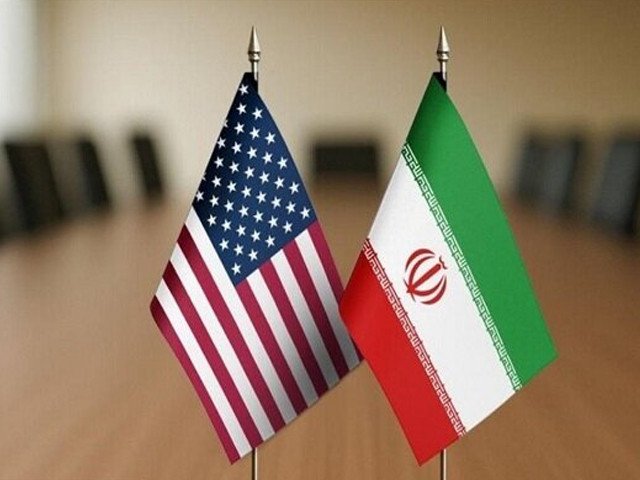
The United States on Wednesday released the official text of the memorandum of understanding reached over the weekend with Iran which spells out provisions for reopening the Strait of Hormuz, easing certain financial restrictions on Iran. sets out expectations for addressing Iran's nuclear programme.
Titled the "Islamabad Memorandum of Understanding between the United States of America. the Islamic Republic of Iran," the document was released after outcry that its text hadn't been released publicly.
"This is fundamentally an agreement that allows us to open the Strait of Hormuz immediately, commit the Iranians to destroying the nuclear dust,. then gives us a dial where if the Iranians dial up their good behavior, we respond by dialing up the kind of economic and sanctions relief," a senior US official said.
US and Iran agreed to the MoU following months of intense diplomatic efforts by Pakistan. Prime Minister Shehbaz Sharif, while announcing the deal, also revealed that the formal signing of the document would be held in Switzerland, though it was signed by the US. Iran electronically.
Friday's signing of the 14-point MoU will trigger a 60-day-window to negotiate the final terms of a deal. CNN had earlier reported on a draft agreement. The official text released by the US is similar, but with some language differences, the channel said.
The official text states that both sides, along with their allies in the current conflict, have agreed in principle to the "immediate. permanent termination of military operations on all fronts," including Lebanon, and to refrain from any further use or threat of force against each other.
It also stresses respect for sovereignty and territorial integrity and a commitment to non-interference in internal affairs. Under the proposed framework. the two countries would enter negotiations aimed at securing a final deal within 60 days, extendable by mutual consent.
On security arrangements. the draft stipulates that the US would begin the removal of its naval blockade immediately after signing, with full withdrawal of related restrictions within 30 days. It also envisages the repositioning of US forces away from areas near Iran within 30 days following a final agreement.
In parallel, Iran would facilitate the safe passage of commercial vessels for a limited 60-day period across key maritime routes, including between the Persian Gulf. the Sea of Oman, while also undertaking technical and military clearance operations, including demining activities within 30 days.
The text further calls for consultations with Oman. other Gulf states on future administration and maritime services in the Strait of Hormuz under international law.
The draft also outlines a proposed economic reconstruction. development package worth at least $300 billion, to be developed with regional partners. It states that all necessary financial licences and permissions would be issued by the United States to enable implementation.
A central element of the document is the lifting of sanctions. The US would commit to terminating all forms of sanctions against Iran, including unilateral measures. relevant international resolutions, in a phased manner tied to the final agreement.
On nuclear matters, Iran reaffirms that it will not seek to develop nuclear weapons. Both sides agree to a mechanism for addressing stockpiles of enriched material under International Atomic Energy Agency (IAEA) supervision, alongside broader discussions on enrichment. nuclear requirements within a mutually agreed framework. Pending a final deal. Iran would maintain the status quo of its nuclear programme, while the US would refrain from imposing new sanctions or deploying additional forces in the region.
The draft further provides for the US Treasury to issue waivers allowing the export of Iranian crude oil, petroleum products. related financial and logistical services, alongside measures to unfreeze or release Iranian assets and funds subject to agreed procedures.
An implementation. monitoring mechanism would be established to oversee compliance with the memorandum and any subsequent final agreement, according to the text. It also stipulates that negotiations on the remaining provisions would begin once key sections of the framework are activated.
Finally, the document states that any eventual final deal would be endorsed through a binding United Nations Security Council resolution.
Comments are moderated and generally will be posted if they are on-topic and not abusive.
For more information, please see ourComments FAQ
Discussion
Sign in to join the thread, react, and share images.