Pakistan accuses India of efforts to derail debate on transboundary water governance
India has launched a concerted campaign to undermine an international seminar in Brussels on transboundary water resources amid growing global scrutiny of New Delhi’s unilateral suspension of the Indus Waters Treaty (IWT). diplomatic sources said on Thursday.
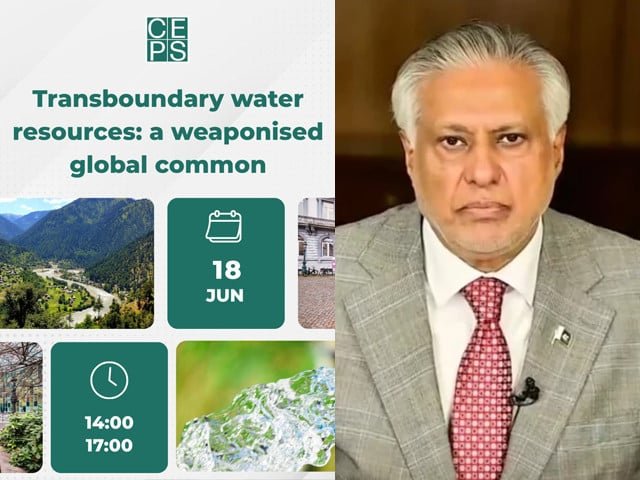
The seminar, titled “Transboundary Water Resources: A Weaponised Global Common,” was organised by the Embassy of Pakistan to Belgium, Luxembourg, the European Union. NATO in collaboration with the Brussels-based think tank, the Centre for European Policy Studies (CEPS).
The event attracted diplomats, members of the European Parliament, European Union officials, researchers, academics. journalists, reflecting growing international interest in the implications of weaponising shared water resources.
According to diplomatic sources, the Indian side has been unnerved by Pakistan’s efforts to internationalise the issue of transboundary water governance. expose the dangers posed by the weaponisation of shared water resources.
The controversy comes against the backdrop of India’s unilateral decision last year to place the Indus Waters Treaty in abeyance following the Pahalgam attack, a move Pakistan has consistently described as illegal, provocative. contrary to international law.
Diplomatic sources said India’s reaction to the Brussels event reflected its growing discomfort over what they described as a “losing narrative battle” on the Indus Waters Treaty. broader questions of compliance with international obligations.
“India’s panic over a scholarly and policy-oriented discussion on transboundary water resources speaks volumes. If New Delhi believes its actions are legally. morally defensible, it should welcome debate rather than seek to suppress it,” a diplomatic source said.
According to officials familiar with the matter, Indian efforts to disrupt the event took multiple forms in recent days.
First, a coordinated social media campaign targeted both the seminar and its organisers. Several posts sought to portray the event as politically motivated while attempting to discourage participation.
Second. diplomatic sources alleged that Indian officials exerted pressure on a number of panellists, resulting in some withdrawals shortly before the event.
Third, organisers reportedly faced a wave of suspicious. fake registrations through the think tank’s website, a move sources said appeared aimed at disrupting logistical arrangements and creating confusion around attendance.
Diplomatic sources described the actions as an attempt to intimidate participants and divert attention from the substantive issues under discussion.
“The objective is not difficult to understand. India wants to prevent a serious conversation on the implications of weaponising shared water resources. the broader consequences for international law and regional stability,” another source said.
The seminar examined the growing significance of transboundary water resources at the intersection of climate change, regional security. international law, while discussing challenges arising from the increasing weaponisation of shared water resources.
A video message by Deputy Prime Minister and Foreign Minister Senator Ishaq Dar served as the keynote address. The event also featured Federal Minister for Climate Change. Environmental Coordination Senator Dr Musadik Malik, along with European and international experts on water governance, climate policy and international law.
The discussions were organised around two panels: “Climate, Society. Water Vulnerability” and “Transboundary Cooperation, Rule of Law and Water Weaponisation.”
The first panel focused on Pakistan’s climate vulnerability, recurrent flooding. the impact of water-related challenges on communities, ecosystems and food security. The second panel examined legal. diplomatic mechanisms governing shared water resources, with particular reference to the Indus Waters Treaty and lessons from water-sharing arrangements around the world.
Addressing the gathering, Pakistan’s Ambassador to the European Union described transboundary water resources as a critical pillar of regional stability, global security. the international legal order. He noted that more than 250 million Pakistanis depend on the Indus Basin. reaffirmed Pakistan’s commitment to the Treaty and the peaceful resolution of disputes through established mechanisms.
In his keynote address, Dar stressed that the governance of transboundary waters through treaties. agreements was of global importance and that peaceful coexistence among nations depended on respect for international law and treaty obligations.
Recalling that the Indus Waters Treaty had survived three wars. numerous crises over more than six decades, he described the agreement as one of the world’s most resilient frameworks for transboundary water cooperation.
The foreign minister also expressed concern over recent Indian reservoir expansion. diversion projects on the Indus river system, warning that such measures could alter the natural flow of rivers and create conditions for “hydro-hegemony” with serious implications for regional stability and water security.
“Water must never be used as an instrument of coercion,” Dar said, reaffirming Pakistan’s commitment to dialogue, diplomacy. international law while calling for greater international cooperation on water security.
Diplomatic sources argued that India’s aggressive response had inadvertently amplified Pakistan’s message by drawing greater international attention to both the seminar. the broader debate over the future of transboundary water governance.
“Instead of engaging constructively, India is once again attempting to silence debate. obscure uncomfortable questions regarding its own conduct,” a source remarked.
The sources maintained that New Delhi’s actions formed part of a broader effort to deflect international attention from what they described as India’s troubling record on international law. treaty compliance.
“India’s campaign is designed to obfuscate the core issues and distract the global community from its own actions. The real question is whether unilateral measures against a long-standing international treaty can be justified under any accepted legal framework,” a diplomatic source said.
Officials praised the Pakistani mission in Brussels for spearheading what they described as a timely initiative to raise awareness about the global implications of weaponised water policies.
They expressed confidence that attempts to disrupt the seminar would fail. that the discussions would contribute to a wider international conversation on protecting transboundary water agreements from political coercion.
“The stronger the attempts to suppress debate, the clearer it becomes that this discussion is both necessary. relevant,” a diplomatic source added.
Comments are moderated and generally will be posted if they are on-topic and not abusive.
For more information, please see ourComments FAQ
Discussion
Sign in to join the thread, react, and share images.