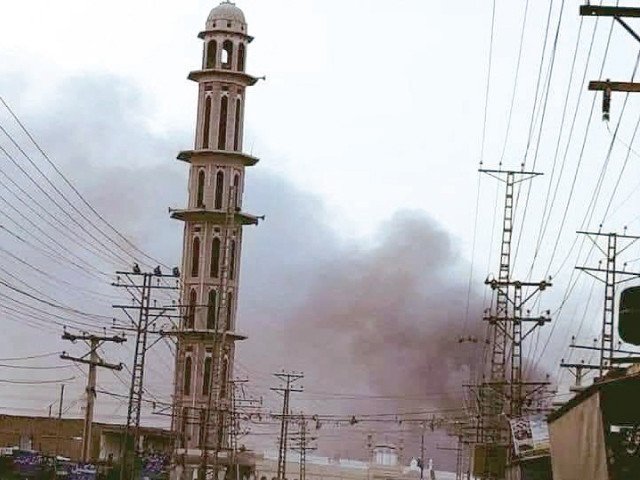
Industrial growth boosts jobs and investment, but raises concerns over emissions, workplace safety
The rapid expansion of industrial activity across district Khyber over the past several years has emerged as a double-edged sword. While the establishment of scores of factories has bolstered the local economy, accelerated business activity,. provided employment to thousands, it has simultaneously raised serious questions regarding environmental pollution, public health, and worker protection.
Local civil society groups, labour unions,. citizens are now demanding effective measures to safeguard the environment and human health alongside industrial growth.
According to available information, Khyber is now home to a wide array of industrial units, including marble processing plants, stone crushers, steel mills, cigarette factories, plastic manufacturing units, ice factories,. pipe production plants. This industrial expansion has not only increased local investment but has also played a significant role in reducing unemployment. creating new business opportunities.
Local business circles report that Tehsil Bara has emerged as a key industrial hub, hosting numerous factories related to steel, marble,. cigarette manufacturing. Similarly, Tehsil Jamrud possesses a vast network of marble. mineral-based industries, while cross-border trade remains more prominent in Tehsil Landi Kotal compared to large-scale industrial activity.
However, alongside this growth, concerns over environmental degradation are mounting. Activists warn that without adherence to modern environmental standards, existing factories are fueling air. noise pollution, dust, and waste management issues. Smoke. fine particulate matter from steel mills, marble crushing plants, and other units are degrading air quality, while dust from stone and marble cutting is causing hardship for residents of surrounding areas.
A chest specialist, Dr Jabbar Afridi, explained that air pollution directly impacts human health. He noted that continuous exposure to industrial smoke. dust can lead to respiratory diseases, asthma, allergies, coughs, eye irritation, and various lung ailments. "Children, the elderly,. those with pre-existing respiratory conditions are most vulnerable," he said, adding that the use of eco-friendly technology and protective measures is essential to mitigate risks to public health.
Meanwhile, the issue of labour rights and safety is gaining increasing attention. Lal Wali Afridi. Deputy Secretary of the Khyber-Pakhtunkhwa Insaf Labour Wing, claimed in an interview with The Express Tribune that over 25,000 workers are employed across various industries in the tribal districts, particularly Khyber, yet no effective system exists for their protection.
He stated that safety arrangements in numerous factories are inadequate, leading to recurring accidents. "Several workers have lost their lives on duty,. many more have been injured, but there is no comprehensive system for permanent relief or compensation for affected families," he said. Afridi demanded that the provincial government condition industrial unit registration on safety standards. establish a permanent welfare fund for workers to financially support affected families and orphans in case of accidents.
Workers at various industrial units in Bara echoed these concerns, demanding special government attention. They noted that while a labour department exists in Bara, the working class lacks adequate facilities. They called for the establishment of a labour colony in Bara to provide proper housing and. following Peshawar's example, the creation of working-focus grammar schools for their children to ensure free, quality education.
On the enforcement front, the district administration in Bara and the Environmental Protection Agency (EPA) have been taking action. Sources indicate. legal proceedings against approximately 16 steel mills in Bara for violating environmental laws have reached their final stage. The administration, in coordination with the EPA, has issued first. second-stage notices to the relevant units, and hearings for factory owners before the Director General (DG) EPA have been completed.
Assistant Commissioner Bara. Talha Rafiq, told The Express Tribune that of six cigarette manufacturing factories in Bara, only one remains active; similarly, two out of six flour mills are operational. He confirmed that 16 steel mills have received formal hearing notices. While the district administration has the power to inspect, fine,. report violations under environmental protection laws, the authority to completely seal or close an industrial unit rests with the DG EPA.
Comments are moderated and generally will be posted if they are on-topic and not abusive.
For more information, please see ourComments FAQ
Discussion
Sign in to join the thread, react, and share images.