New tariff talks, agricultural deals, and rare earth negotiations signal cautious reset in China-US economic ties
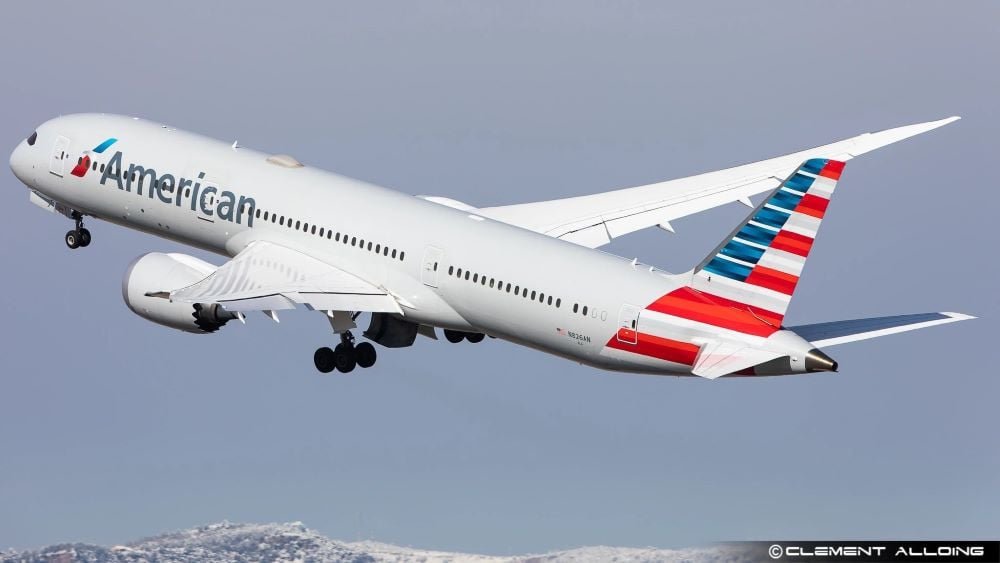
China’s Ministry of Commerce confirmed on Wednesday that airlines in China will introduce 200 aircraft from Boeing. marking one of the largest single procurement commitments in recent years.
The announcement came days after President Donald Trump claimed. China had agreed to buy 200 Boeing jets with GE Aerospace engines. The deal “includes approximately 200 planes. a promise of up to 750 if they do a good job”, Trump told reporters on Air Force One on Friday after concluding his high-profile visit to China.
The announcement on the website of China’s Ministry of Commerce outlines the preliminary outcomes of recent high-level trade engagements between Beijing. Washington. According to the statement, the aircraft will be supplied by Boeing. introduced based on commercial demand and fleet expansion needs, with the US also ensuring the continued supply of engines and critical components.
The deal was framed as part of the broader economic understanding reached during discussions involving President Donald Trump. Chinese President Xi Jinping, who met in Beijing during Trump’s state visit from May 13 to 15.
While aviation took centre stage, the agreement sits within a much larger package of trade understandings that signal a cautious but structured effort to stabilise bilateral economic ties after years of tariff disputes, sanctions,. countermeasures.
Alongside the aircraft agreement. both sides have agreed in principle to explore a reciprocal tariff-reduction mechanism under a future Trade Council framework. The proposed arrangement would cover at least $30 billion worth of goods on each side. potentially allowing selected products to benefit from lower tariff rates or most-favoured-nation treatment.
Chinese officials stressed that the objective is to prevent future tariff escalations. to ensure that any new US trade measures remain within agreed ceilings, particularly following legal and political uncertainty in Washington over earlier tariff policies.
To manage this evolving relationship, Beijing and Washington have also agreed to establish new Trade and Investment Councils. These bodies are intended to shift bilateral engagement away from crisis-driven negotiations toward a permanent institutional mechanism for resolving disputes, coordinating policy,. expanding cooperation.
Officials described the councils as a stabilising framework. could reduce volatility in one of the world’s most economically consequential relationships.
Agricultural trade has also emerged as a key pillar of the negotiations.
China, one of the world’s largest agricultural import markets, is seeking expanded access for US farm products, while the United States continues to rely on Chinese demand for exports such as soybeans, beef,. poultry products.
At the same time, Chinese agricultural exports, including seafood, fruits, vegetables,. dairy products, are expected to gain improved access to the US market under the evolving arrangement. Both sides have agreed to address selected non-tariff barriers and set indicative targets for expanding agricultural trade in both directions.
Another sensitive area discussed was the export of rare earth elements. critical minerals such as yttrium, scandium, neodymium, and indium. China reaffirmed that its export controls are implemented under domestic law and applied through a licensing system for civilian-use applications. At the same time, Beijing expressed willingness to cooperate with Washington to ensure stable global supply chains. address mutual concerns in strategic materials.
The two sides also reviewed the status of the Kuala Lumpur trade arrangement, reached in October 2025, which temporarily suspended a range of tariffs. countermeasures until November 2026.
These included US reciprocal tariffs, Chinese countermeasures, export controls, and restrictions affecting sectors such as maritime logistics and shipbuilding. Both governments have now reaffirmed their commitment to maintaining the arrangement. are in discussions about extending it to preserve policy stability.
In parallel with broader trade talks, both sides reached targeted agreements on agricultural market access.
The United States agreed to ease several restrictions, including lifting automatic detention measures on Chinese dairy products, allowing trial imports of Chinese bonsai plants,. removing barriers affecting certain aquatic products. Washington is also committed to advancing recognition of disease-free zones for avian influenza and accelerating regulatory reviews of Chinese companies.
In return, China agreed to resume registration approvals for qualified US beef exporters, ease poultry import restrictions from selected US states,. restart imports of certain poultry products, while continuing technical reviews related to food safety and veterinary standards.
Taken together, the agreement reflects a cautious recalibration rather than a full reset of China-US economic relations. While structural tensions remain, particularly around technology controls, tariffs,. strategic industries, the scale of the Boeing order and the institutional frameworks now under discussion signal a mutual interest in preventing further escalation.
At the centre of this evolving relationship stands a pragmatic calculation: both sides appear willing to compartmentalise disputes while preserving trade flows in critical sectors. remain deeply interdependent.
Comments are moderated and generally will be posted if they are on-topic and not abusive.
For more information, please see ourComments FAQ
Discussion
Sign in to join the thread, react, and share images.