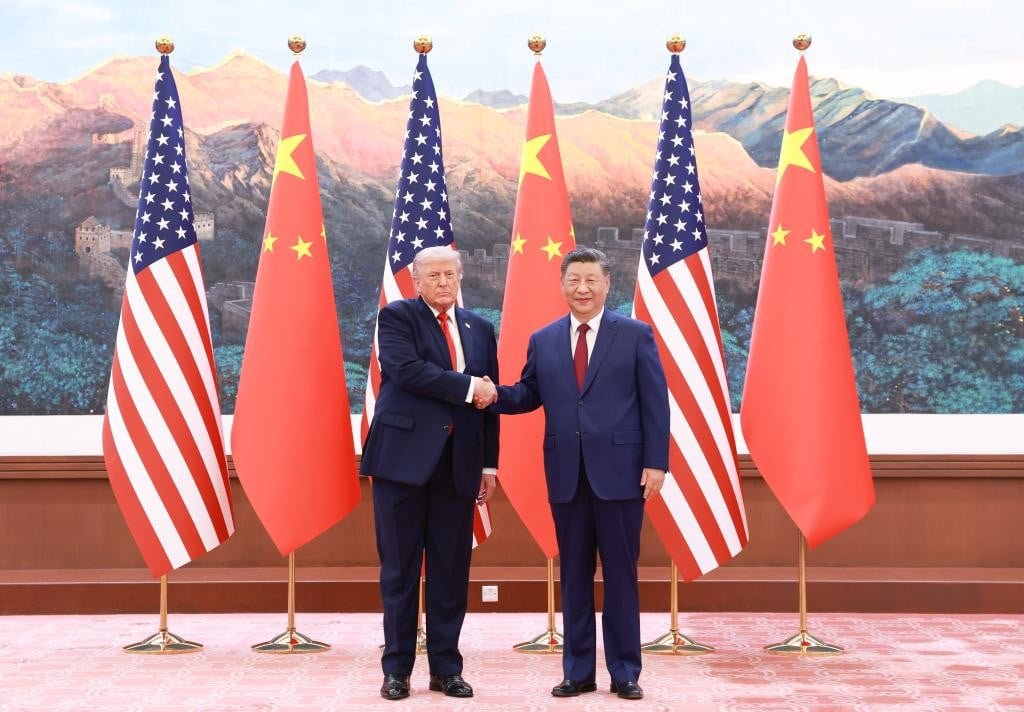
US media says Trump-Xi summit shows diplomacy but deep divisions remain over trade and security
American media organisations offered sharply different interpretations of President Donald Trump’s summit with Chinese President Xi Jinping in Beijing, with coverage reflecting contrasting views on diplomacy, global power, trade,. national security.
Major mainstream newspapers largely portrayed the summit as symbolically important. substantively limited.The Washington Poststressed the extraordinary pageantry surrounding Trump’s arrival in Beijing, arguing that the event projected China’s long-standing ambition to stand as an equal superpower alongside the United States. The paper framed the summit as a diplomatic showcase designed primarily to elevate Xi’s global stature.
The New York Timesfocusedon the gap between rhetoric and results. Its reporting stressed that although Trump. Xi repeatedly stressed “friendship” and “stability,” the leaders failed to resolve deep disputes over trade, Taiwan, Iran, and technology. The paper also highlighted Beijing’s reluctance to formally confirm Trump’s announcement of a 200-plane Boeing deal. suggesting that many of the summit’s economic achievements remained uncertain.
Read:China says ready to work with all parties on energy security after Xi-Trump summit
The Wall Street Journaldescribedthe meetings as an effort to build “strategic stability” between the two powers. Its coverage noted that while no major agreements emerged, both governments appeared eager to reduce tensions. prevent further deterioration in relations. At the same time, theJournalunderscored continuing divisions over Taiwan, artificial intelligence, and broader geopolitical competition.
Digital outletAxiosadopteda more sceptical tone, arguing that the carefully staged warmth between Trump. Xi concealed deeper forces pulling the two countries apart. The publication emphasised ongoing economic decoupling, strategic rivalry, and distrust beneath the summit’s friendly optics.
Television. general news organisations focused heavily on the diplomatic reset and global security implications.CNNportrayedthe visit as an attempt to stabilise relations after years of tension, emphasising the warmer tone and symbolic gestures despite the lack of concrete breakthroughs.ABC Newshighlighted Trump’s comments about shared US-China goals regarding Iran, including keeping the Strait of Hormuz open and preventing Tehran from obtaining nuclear weapons.
Conservative-leaning outlets gave greater attention to Taiwan. perceptions of American strength.Fox Newsreportedthat Trump left Beijing without making firm commitments to Taiwan’s defence while stressing areas of agreement with Xi on Middle East security.The New York Postfocused on Xi’s forceful warnings regarding Taiwan while presenting the summit as a combination of personal diplomacy and strategic tension.
News magazines framed the summit within a broader narrative of shifting global power.TIMEarguedthat artificial intelligence competition remained the “elephant in the room”. overshadowing public discussions dominated by trade. The magazine also suggested. Trump’s deferential tone toward Xi reflected a changing balance in international influence increasingly tilted toward Beijing.
Also Read:Trump says US and China are aligned on Iran, Tehran must make a deal soon
Meanwhile,Newsweekconcentratedon the domestic political implications of Taiwan policy inside the US. Its reporting explored how public support for defending Taiwan among swing voters could shape Washington’s future deterrence strategy. The magazine also concluded that both Trump. Xi emerged with largely symbolic victories — Trump on trade optics and Xi on China’s international status.
The Associated Press,maintaininga more traditional wire-service approach, summarised the summit as a cautious attempt by both governments to stabilise ties while acknowledging that major disagreements over trade, Taiwan, Iran,. technology remained unresolved.
Taken together, the American media landscape reflected no single consensus on the summit. Some organisations viewed the visit as an important diplomatic reset aimed at avoiding confrontation between rival superpowers, while others saw it primarily as political theatre masking intensifying long-term competition between Washington. Beijing.
Comments are moderated and generally will be posted if they are on-topic and not abusive.
For more information, please see ourComments FAQ
Discussion
Sign in to join the thread, react, and share images.