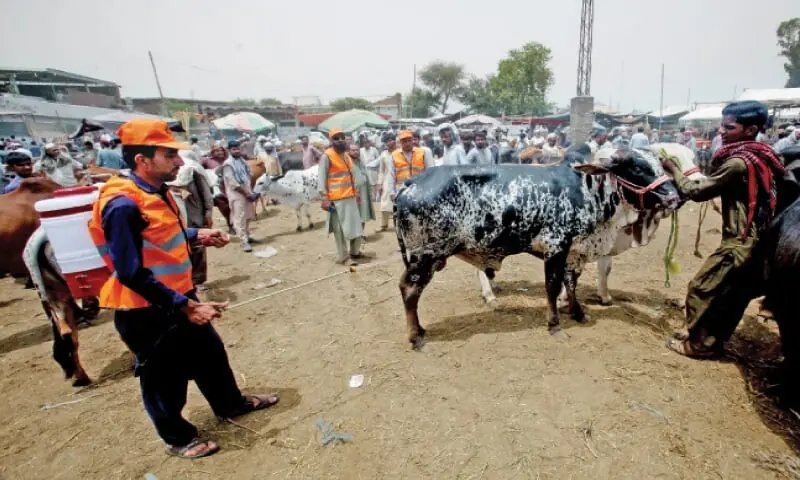
KARACHI: With Eidul Azha just round the corner, health experts have raised concerns over the increasing risk for zoonotic disease transmission. environmental pollution during the festive occasion.
They urged citizens to ensure handling. slaughtering of sacrificial animals with adequate hygiene and veterinary precautions to minimise risk of Congo Crimean Haemorrhagic Fever (CCHF) — a viral disease that has a fatality rate of up to 40 per cent. There is no vaccine available for either animals or humans.
“Recent health data shows an upward trajectory, with cases surfacing in dense urban centres. The upcoming festival multiplies exposure opportunities for livestock handlers, butchers. the general public, threatening to strain our healthcare infrastructure if left unchecked,” said Dr Abdul Ghafoor Shoro representing the Pakistan Medical Association (PMA).
He stressed the need for activating high-containment isolation wards across major public. private hospitals and ensuring an uninterrupted supply of personal protective equipment for medical staff, alongside rapid diagnostic testing capabilities.
Citizens advised to adopt precautions while livestock handling and slaughtering
“District authorities should mandate basic safety protocols and protective gear usage for professional butchers operating during the festival,” he said.
In a statement, the association urged the public to prioritise safety over convenience by adopting simple precautions during livestock handling. slaughtering.
It says: “Apply insect repellents containing DEET (N,N-Diethyl-meta-toluamide) on exposed skin and clothing. Carefully check livestock for ticks around the ears, neck and soft skin areas. For livestock bought early, consult a veterinarian to apply safe anti-tick treatments.
“Wear light-coloured, long-sleeved shirts and trousers so that ticks can be easily spotted. Do not wear open shoes or sandals; use closed footwear with socks.
“Never crush a tick with bare hands, as the fluids are highly infectious. Use tweezers or gloves to remove them safely,” the association stated.
During sacrificial slaughtering, wear gloves, masks and protective aprons. Avoid direct contact with animal blood and fluids. Properly bury or dispose of animal waste. offal immediately, and wash all knives and surfaces with a chlorine bleach solution, it adds.
According to experts. Congo virus is primarily transmitted to humans through the bite of infected “Hyalomma ticks” found on livestock, or through direct contact with the blood, secretions, or tissues of infected animals during or immediately after slaughter.
Human-to-human transmission can also occur in household or healthcare settings due to direct contact with infected bodily fluids.
“Early symptoms of Congo virus mimic other endemic diseases like dengue or severe malaria. Onset is sudden, featuring high fever, severe muscle aches, dizziness, neck pain,. vomiting,” Dr Shoro explained, adding that if these symptoms appear alongside a history of livestock exposure, the individual needs immediate and emergency medical care.
At a seminar held at Karachi University’s Dr Panjwani Center for Molecular Medicine. Drug Research (PCMD), Dr Saman Nadeem, consultant clinical microbiologist and section head of microbiology at the National Medical Centre, said preventive measures during this Eid reduced the risk of zoonotic disease transmission.
These precautions included purchasing healthy animals, ensuring veterinary examination, maintaining personal hygiene, using designated slaughter areas, safely disposing of animal waste,. avoiding direct contact with animal fluids.
Food-borne illnesses, she pointed out, were common during this Eid. investigations revealed repeated thawing and reheating of stored meat over several days as a factor contributing to these illnesses.
Published in Dawn, May 26th, 2026
Discussion
Sign in to join the thread, react, and share images.